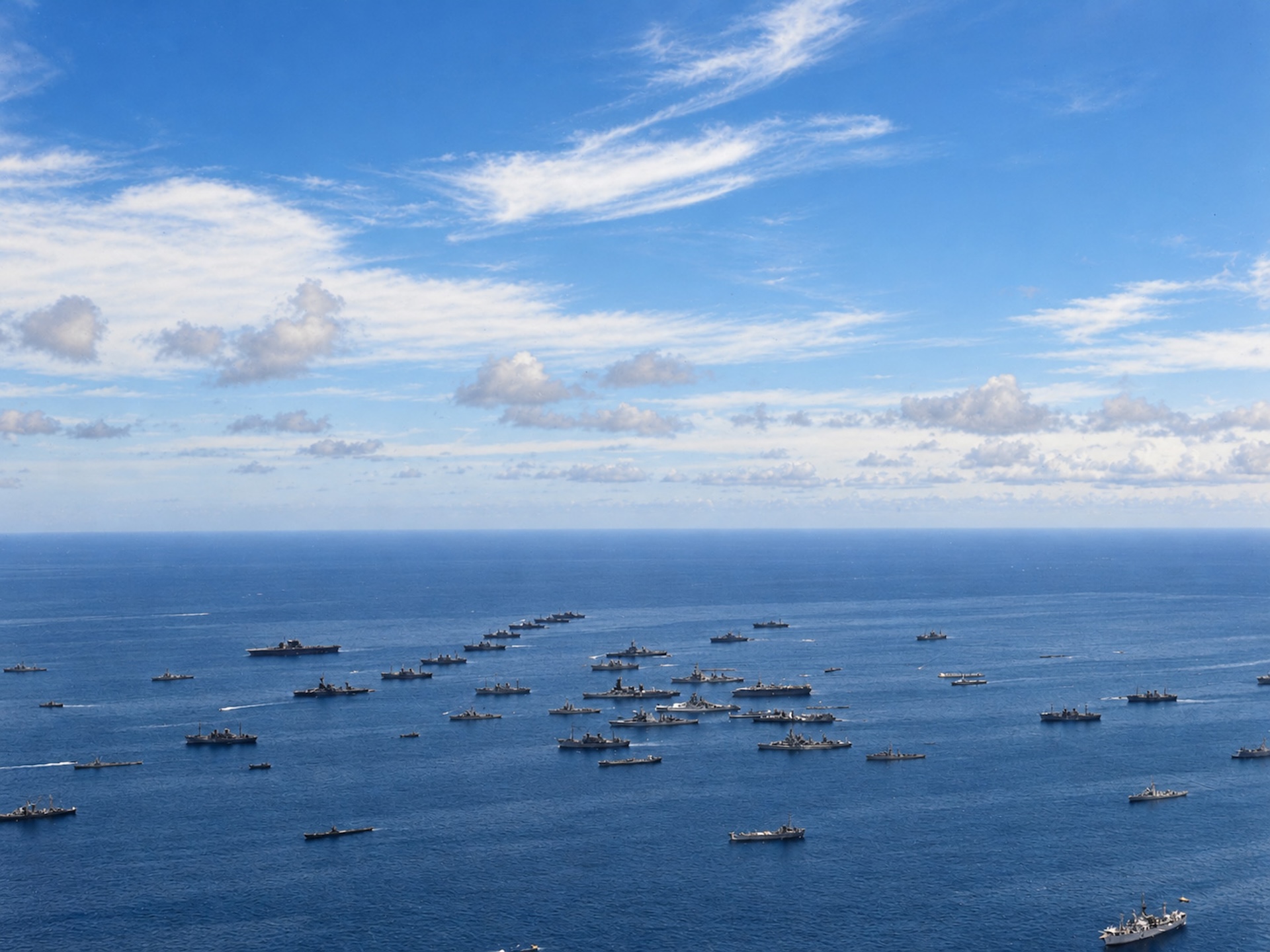
In the summer of 1946, less than a year after the atomic bombings of Hiroshima and Nagasaki, the United States conducted Operation Crossroads at Bikini Atoll in the Marshall Islands. Presented as a scientific and military experiment, Crossroads was designed to answer a pressing question: What would nuclear weapons do to a modern fleet? The results reshaped military thinking, revealed previously underestimated dangers of radioactive contamination and foreshadowed many of the environmental and humanitarian challenges that would characterise the nuclear age.
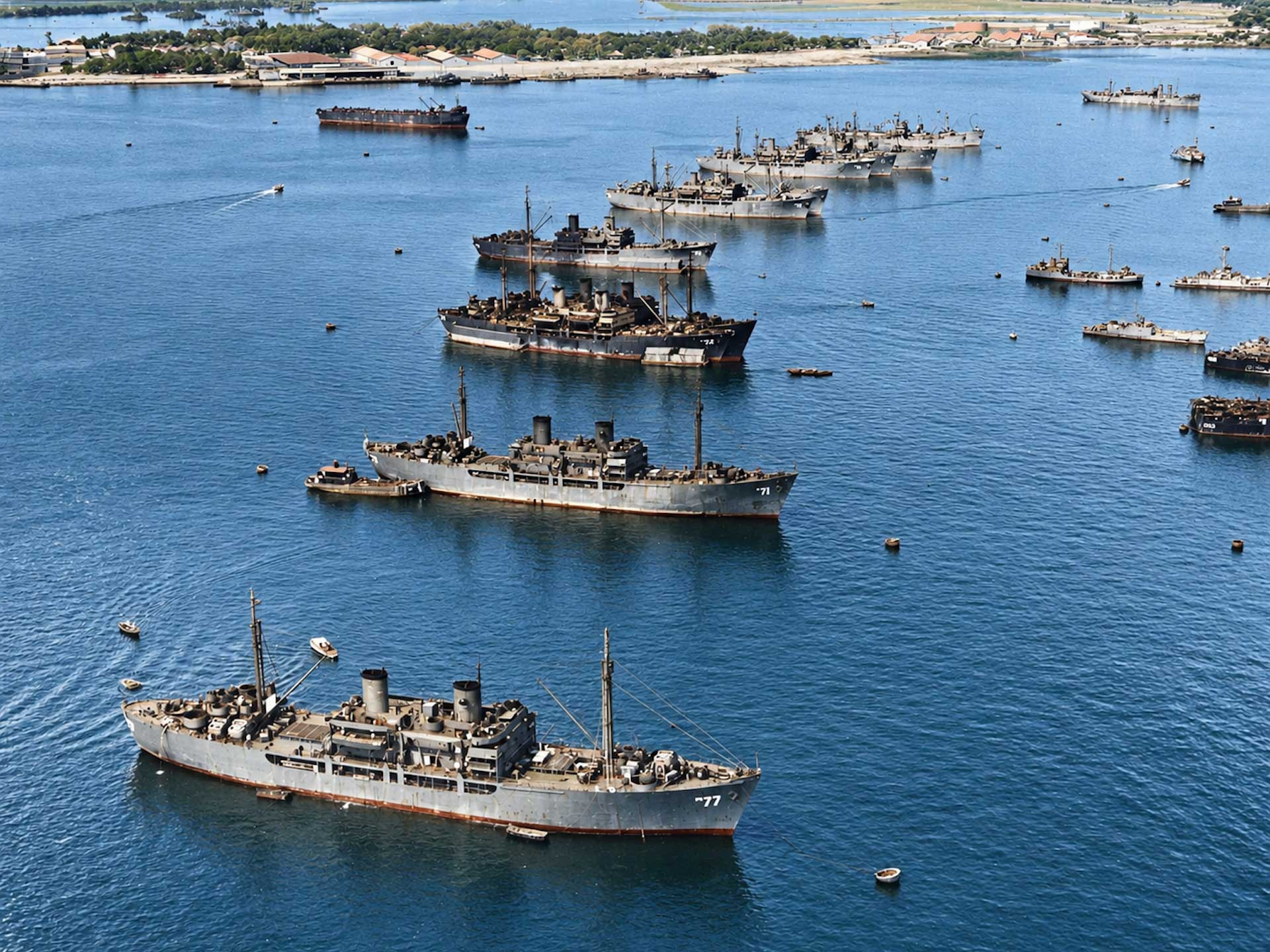
Approximately 42,000 personnel participated in the operation, and about ninety-five target vessels were assembled in Bikini Lagoon. Before testing began, the United States relocated the atoll’s 167 inhabitants to Rongerik Atoll. Although officials described their removal as temporary, inadequate food and water made the new settlement unsustainable. Their displacement became part of the lasting human legacy of American nuclear testing in the Marshall Islands.
The first test, Able, occurred on 1 July 1946. A plutonium bomb was dropped from a B-29 and detonated above the target fleet. Because it missed its intended aiming point, the bomb caused less destruction than planners anticipated. Five ships sank immediately, but much of the fleet remained afloat. This led some commentators to conclude prematurely that atomic bombs were simply larger versions of conventional weapons and that modern warships could survive a nuclear attack.
The Baker test on 25 July produced a very different result. Detonated approximately 27 metres underwater, the bomb lifted an enormous column of radioactive water, coral and debris above the lagoon. The resulting base surge swept outward and coated nearby ships with contaminated spray. Several vessels sank, including the aircraft carrier Saratoga and the battleship Arkansas, but the most consequential result was not blast damage – it was radioactive contamination.
Many ships remained structurally intact yet were too radioactive to be boarded or operated safely. Decontamination crews attempted to wash and scrub the vessels, often without adequate knowledge of the risks they faced. Contaminated lagoon water repeatedly redeposited radioactive material on the ships, demonstrating that existing decontamination techniques were inadequate. The planned third test, Charlie, was eventually cancelled, in part because the navy was still struggling with the aftermath of Baker.
From a military perspective, Crossroads produced mixed conclusions. The tests demonstrated that dispersed fleets could survive some aspects of nuclear attack better than expected. At the same time, they revealed that radioactive contamination could disable ships and endanger crews on a scale not previously understood. The operation shifted attention from blast effects alone to the broader challenges of radiation protection, decontamination and environmental damage.
For the people of Bikini, the consequences extended far beyond the two explosions. Their displacement, loss of access to their ancestral homeland and continuing social disruption became part of the larger legacy of nuclear testing in the Marshall Islands. Operation Crossroads demonstrated that the effects of nuclear weapons did not end when the mushroom cloud disappeared. Radiation persisted on ships, in lagoon water, within marine sediments and in the lives of displaced communities. At Bikini, the nuclear age went to sea, and the world began to understand that radioactive contamination could be as consequential as the explosion itself.