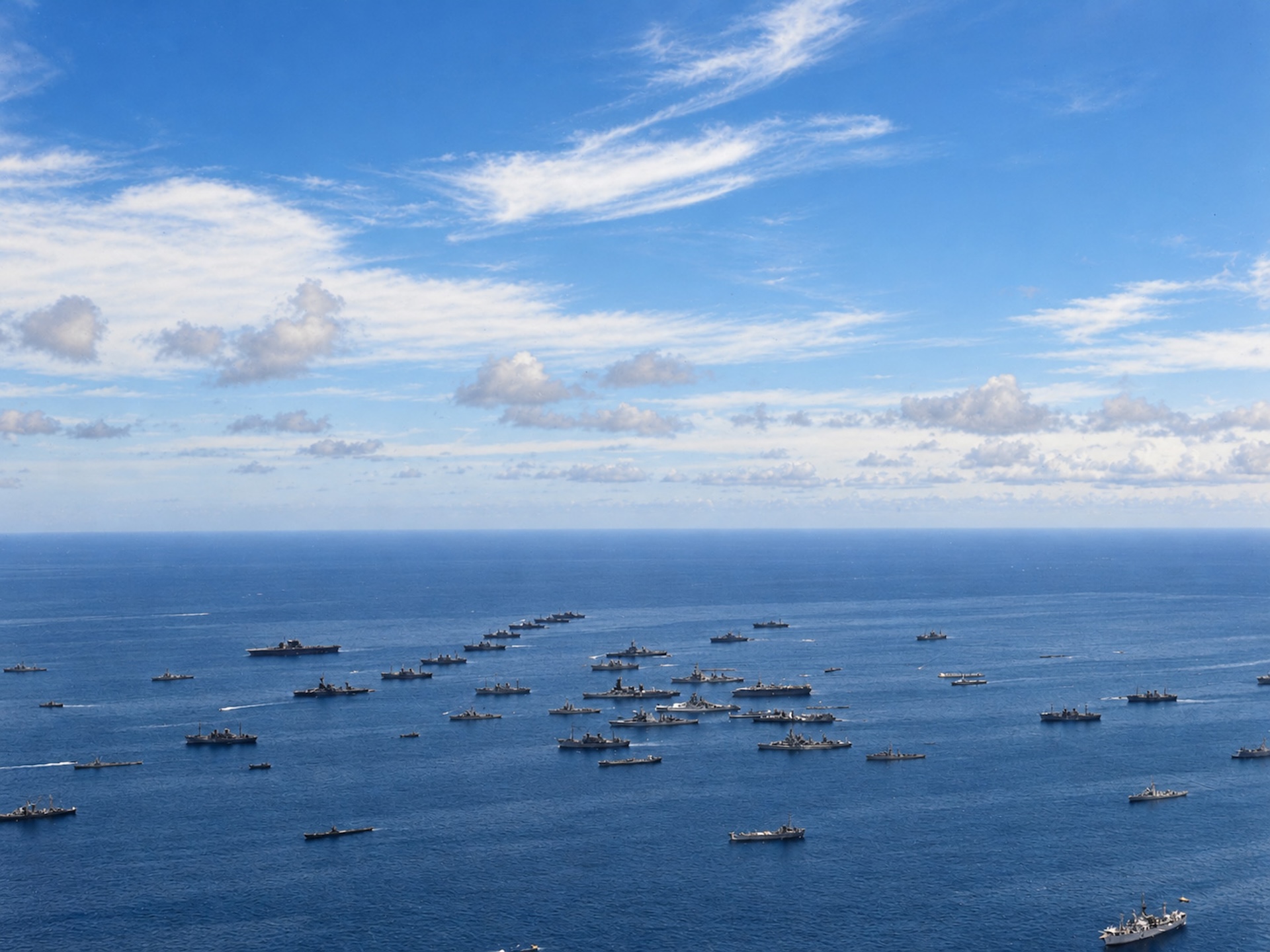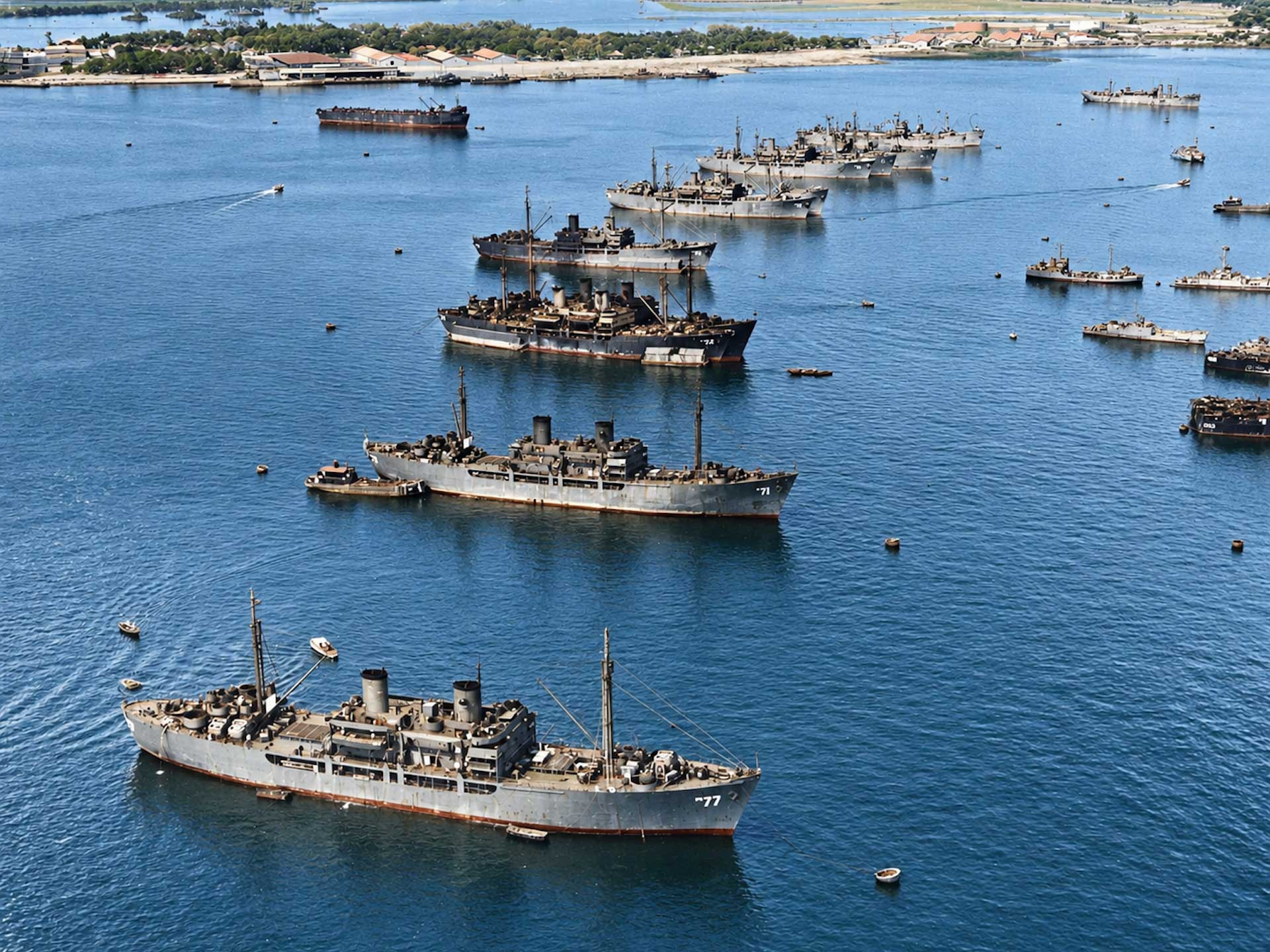

When Operation Crossroads concluded at Bikini Atoll in the summer of 1946, military planners believed they had successfully measured the effects of atomic weapons against a fleet of warships. Battleships had been damaged, aircraft carriers battered and submarines subjected to unprecedented forces. Thousands of instruments had recorded blast pressures, thermal radiation, underwater shock waves and structural failures. Yet the most enduring discovery of Operation Crossroads was one that no instrument had been specifically designed to measure.
The underwater Baker detonation revealed that radioactive contamination could become as significant a military problem as blast damage itself. Ships that survived the explosion could remain too radioactive for their crews to occupy safely. Equipment that appeared undamaged became unusable. Conventional damage-control procedures proved inadequate against an invisible hazard that could not be extinguished, pumped out or patched.
Operation Crossroads fundamentally changed how scientists, physicians, engineers and military planners viewed ionising radiation. The lessons learned at Bikini helped transform wartime radiation-monitoring into the modern disciplines of health physics, radiological protection, contamination control, personnel dosimetry and nuclear emergency response. Eight decades later, those principles continue to guide military operations, civilian nuclear power, medical radiation safety and environmental remediation around the world.
Before Bikini: a scientific problem
During the Manhattan Project, radiation protection was primarily an occupational concern. Scientists and technicians working with uranium, plutonium and experimental reactors required monitoring to prevent excessive exposure. Health physicists developed methods for measuring radiation fields, establishing exposure limits and protecting laboratory personnel.
These efforts were remarkably successful. Despite the unprecedented nature of the Manhattan Project, relatively few workers received serious radiation injuries. However, most experience had been gained within controlled laboratory and industrial environments rather than in large-scale military operations. Operation Crossroads changed that perspective dramatically.
For the first time, radiation protection became a challenge involving thousands of military personnel, dozens of ships, aircraft, harbour facilities, open-ocean environments and continuously changing contamination conditions.
Baker changed everything
The Baker underwater detonation demonstrated that radioactive contamination behaved very differently from what many scientists and military planners had expected. Instead of remaining concentrated near the explosion, radioactive fission products became mixed with millions of tonnes of seawater, coral particles, mud and debris. As the immense water column collapsed, radioactive spray settled across nearly every exposed surface of the target fleet.
The contamination spread into ventilation systems, piping, machinery spaces, electrical equipment, weapons mounts, deck fittings and inaccessible compartments. Saltwater carried radioactive materials into areas impossible to inspect visually. Perhaps most disturbing was:
Radiation could not be detected by human senses.
Ships appeared undamaged.
Ship machinery often remained functional.
Ship hulls remained afloat.
Nevertheless, radiation surveys revealed environments where crews could receive hazardous exposures simply by performing routine maintenance. Military planners suddenly faced a completely new category of operational hazard.
Washing down the target fleet
Prior to Crossroads, naval damage control emphasised firefighting, flooding, structural repairs and restoring propulsion. Following Baker, contamination control became equally important. Naval personnel experimented with nearly every cleaning method available. These included the following:
- High-pressure seawater washing
- Freshwater flushing
- Steam cleaning
- Soap and detergent solutions
- Acid treatments
- Mechanical scrubbing
- Paint removal
- Surface replacement
The results were disappointing. Radioactive particles had bonded to paint, penetrated rust layers, accumulated in piping systems and settled into microscopic cracks throughout the ships. Crews quickly learned that contamination was often easier to spread than to remove. These observations led directly to the development of standardised contamination-control procedures, including controlled work zones, protective clothing, contamination surveys, equipment isolation and systematic decontamination protocols that remain recognisable today.
Measuring the invisible
Operation Crossroads also demonstrated the importance of accurately measuring radiation exposure. During the Manhattan Project, film badges and portable radiation instruments had been used primarily by scientists and laboratory workers. At Bikini, these techniques had to be adapted for thousands of sailors, engineers, physicians and technicians working in a constantly changing radiological environment.
Personnel wore film badges to estimate cumulative radiation exposure while survey teams continuously monitored ships using Geiger counters, ionisation chambers and other portable detectors. The experience highlighted both the strengths and limitations of early radiation instruments. Measurements varied depending upon contamination patterns, weather conditions, shielding and instrument sensitivity. Survey techniques required standardisation, calibration and improved training. Many of the procedures developed following Operation Crossroads became the foundation for modern personnel-dosimetry programmes employed throughout government laboratories, commercial nuclear facilities, hospitals and research institutions.
Health physics comes of age
Although the term health physics originated during the Manhattan Project, Operation Crossroads transformed it from a specialised wartime occupation into a recognised scientific and engineering discipline. Health physicists suddenly found themselves addressing problems that extended well beyond laboratory radiation protection. Their responsibilities included:
- Environmental monitoring
- Personnel exposure assessment
- Internal contamination evaluation
- Instrument calibration
- Protective equipment recommendations
- Decontamination procedures
- Operational planning
- Medical consultation
- Waste management
The field became increasingly interdisciplinary, drawing upon physics, chemistry, biology, medicine, engineering, meteorology, oceanography and environmental science. As nuclear technology expanded during the 1950s, health physics became an essential component of weapons programmes, naval reactors, commercial nuclear power, isotope production, nuclear medicine and radiation research.
Radiological defence becomes military doctrine
The lessons of Bikini influenced every subsequent American nuclear test. Military planners recognised that surviving a nuclear explosion represented only the beginning of the operational challenge. Future doctrine increasingly incorporated:
- Radiological reconnaissance
- Contamination-mapping
- Personnel-monitoring
- Protective equipment
- Controlled-access zones
- Decontamination stations
- Exposure management
- Long-term environmental surveillance
These concepts eventually became standard elements of military nuclear, biological and chemical (NBC), and later chemical, biological, radiological and nuclear (CBRN), defence programmes throughout NATO and in many other countries. Operation Crossroads demonstrated that radiation protection was no longer simply a scientific responsibility – it had become an operational military necessity.
Beyond the military
The influence of Operation Crossroads extended well beyond national defence. The contamination studies conducted at Bikini informed later civilian reactor-safety programmes, nuclear fuel-handling procedures, radioactive waste management, environmental monitoring and occupational radiation-protection standards.
Many of today’s fundamental radiation-protection principles, including minimising exposure time, maximising distance, using appropriate shielding, controlling contamination at its source and continuously monitoring radiation levels, were refined through lessons learned during and after Operation Crossroads. Although radiation science has advanced enormously since 1946, the underlying philosophy remains remarkably similar.
Measure first.
Protect personnel.
Control contamination.
Monitor continuously.
The enduring legacy
Modern radiation protection has evolved considerably over the past eighty years. Digital dosimeters have replaced photographic film badges. Sophisticated spectrometers identify individual radionuclides within seconds. Computer models predict contamination transport across oceans and through the atmosphere. International standards govern occupational exposures worldwide. Yet the conceptual foundations of these systems were shaped by experiences gained during Operation Crossroads.
The tests at Bikini demonstrated that radiation could not be managed through intuition or visual observation. It required measurement, discipline, scientific understanding and carefully developed procedures. Those lessons continue to influence responses to nuclear accidents, reactor operations, radioactive waste management, environmental clean-up, medical imaging, industrial radiography and emergency preparedness.
What Bikini actually taught
Operation Crossroads is often remembered for its towering mushroom clouds and the dramatic photographs of warships subjected to atomic explosions. Those images remain powerful symbols of the beginning of the nuclear age. The operation’s greatest legacy, however, may be far less visible.
By revealing the persistent dangers of radioactive contamination, Operation Crossroads transformed radiation protection from a wartime laboratory speciality into a permanent scientific discipline essential to both military and civilian nuclear technology. The invisible lessons learned at Bikini continue to protect millions of workers, patients, emergency responders and members of the public every day.
Few participants in the summer of 1946 could have imagined that one of Operation Crossroads’s most important achievements would not be measuring the destructive power of the atomic bomb, but learning how to live and work safely in its aftermath.