Introduction
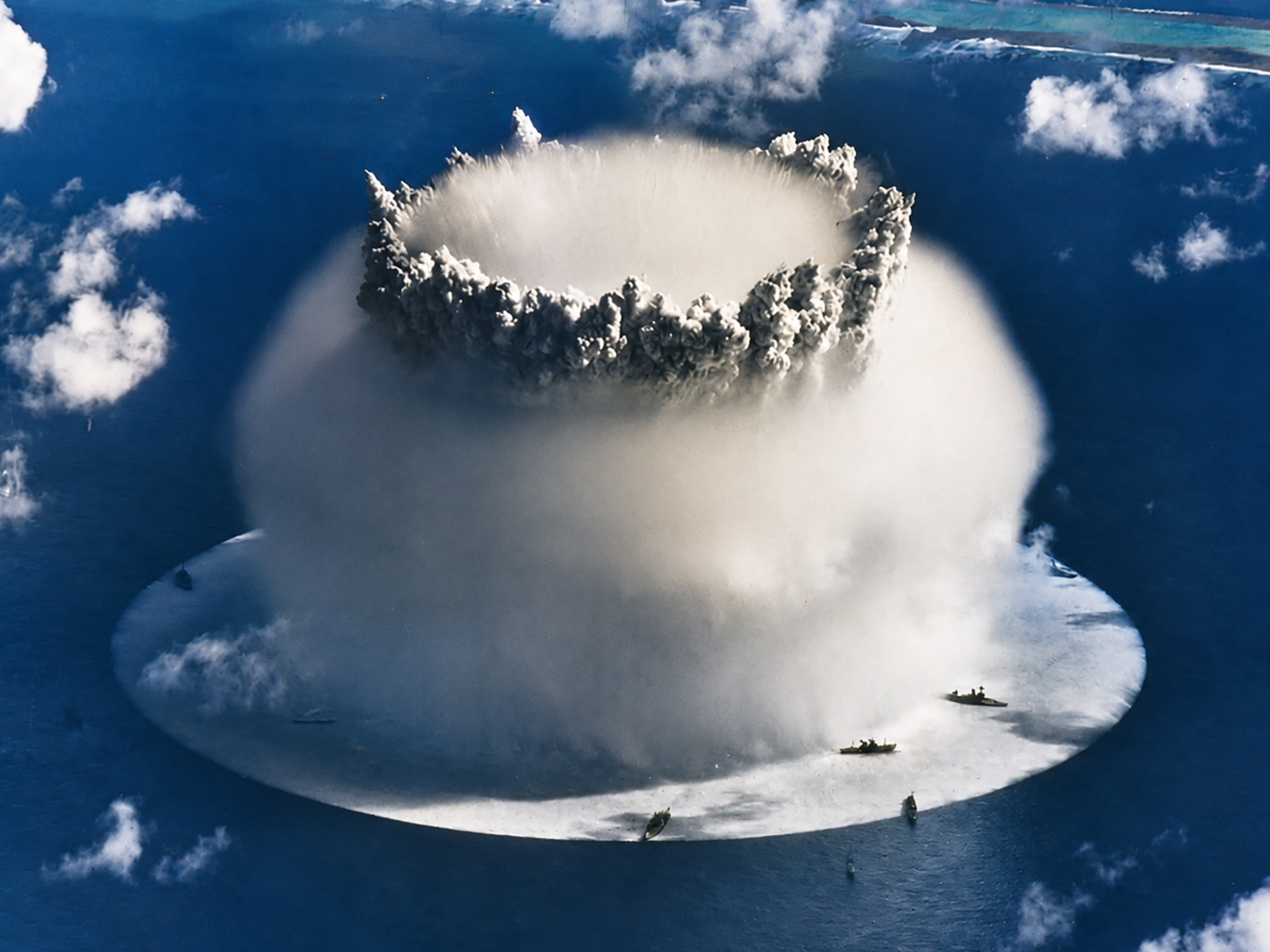
On the morning of July 25, 1946, thousands of military personnel, scientists from Los Alamos Scientific Laboratory, senior naval officers led by Rear Admiral William H. P. Blandy, journalists, members of Congress, and foreign observers watched from ships surrounding Bikini Atoll as the United States prepared to conduct Shot Baker, the second nuclear detonation of Operation Crossroads. Suspended 90 feet beneath the waters of Bikini Lagoon, the plutonium implosion weapon known as Helen of Bikini exploded with a force of approximately 21 kilotons. Within seconds, a towering column of water, steam, and coral erupted skyward, producing one of the most iconic images of the Atomic Age. For many observers, the immense water column appeared to be the defining feature of the test.
History, however, has shown that the most important scientific discovery of Baker was not the spectacular plume rising above the lagoon, but an expanding radioactive cloud spreading silently across its surface. Known as the base surge, this previously unknown phenomenon transformed military understanding of underwater nuclear explosions and forever changed how scientists viewed radioactive fallout, contamination, and radiation protection. More than any other single observation during Operation Crossroads, the base surge demonstrated that the greatest danger following a nuclear explosion might not be blast or heat, but persistent radioactive contamination.
An Unexpected Phenomenon
Prior to Baker, scientists had accumulated considerable knowledge about nuclear explosions through the Trinity test and the bombings of Hiroshima and Nagasaki. They understood blast waves, thermal radiation, prompt neutron and gamma radiation, and the destructive effects of airbursts. Yet no one had witnessed a nuclear weapon detonated underwater. Military planners expected the explosion to generate an enormous shock wave capable of damaging or sinking ships while producing contamination that could be removed through routine decontamination procedures.
Instead, Baker produced a phenomenon that few had anticipated. Almost immediately after the detonation, a dense white cloud formed at the base of the water column and spread rapidly outward in every direction, hugging the surface of Bikini Lagoon. Unlike the towering plume above it, this cloud remained close to the water, engulfing much of the target fleet within minutes.
Although it resembled an ordinary bank of fog, the base surge contained billions of microscopic droplets of seawater contaminated with radioactive fission products, pulverized coral, lagoon sediments, neutron-activated materials, and traces of unfissioned plutonium from the bomb itself. It was not simply condensed steam. It was a moving cloud of radioactive contamination unlike anything previously observed.
The Physics of the Base Surge
The unique behavior of the base surge resulted directly from the underwater detonation. Within microseconds of the explosion, the intense energy of the nuclear fireball vaporized enormous quantities of seawater while creating temperatures of several million degrees. A rapidly expanding gas bubble displaced millions of tons of water, generating the spectacular column that rose thousands of feet into the atmosphere.
Scientists at Los Alamos Scientific Laboratory, under the direction of Dr. Norris E. Bradbury, had carefully calculated the expected yield and underwater shock effects of Baker. While the enormous water column largely confirmed theoretical predictions, the extent and persistence of the radioactive base surge proved far more significant than anticipated. Baker demonstrated that the surrounding environment could fundamentally alter both the behavior of the explosion and the distribution of radioactive materials.
As the bubble expanded and collapsed, steam condensed into fine droplets that incorporated radioactive materials from the weapon, the surrounding seawater, and the coral bottom of Bikini Lagoon. Because these droplets were relatively large and dense, much of the contaminated mixture remained near the surface instead of rising high into the atmosphere. Driven outward by the expanding pressure wave, the radioactive mist spread rapidly across the lagoon, coating ships, aircraft, instruments, and exposed surfaces in its path.
The distinction proved enormously important. Airbursts such as Hiroshima and Nagasaki dispersed much of their radioactive debris high into the atmosphere. Baker demonstrated that an underwater explosion could concentrate radioactive material near the surface, producing intense local contamination that immediately threatened personnel and equipment. In effect, the surrounding environment had become part of the weapon itself.
The extraordinary visual record of Baker owes much to Berlyn Brixner, chief photographer of the Manhattan Project and Operation Crossroads. Using high-speed cameras positioned around Bikini Lagoon, Brixner and his team captured the evolving water column, the expanding base surge, and the collapse of the radioactive cloud. These images remain among the most important scientific photographs ever produced, providing researchers with unprecedented insight into the dynamics of an underwater nuclear explosion.
When Contamination Became the Enemy
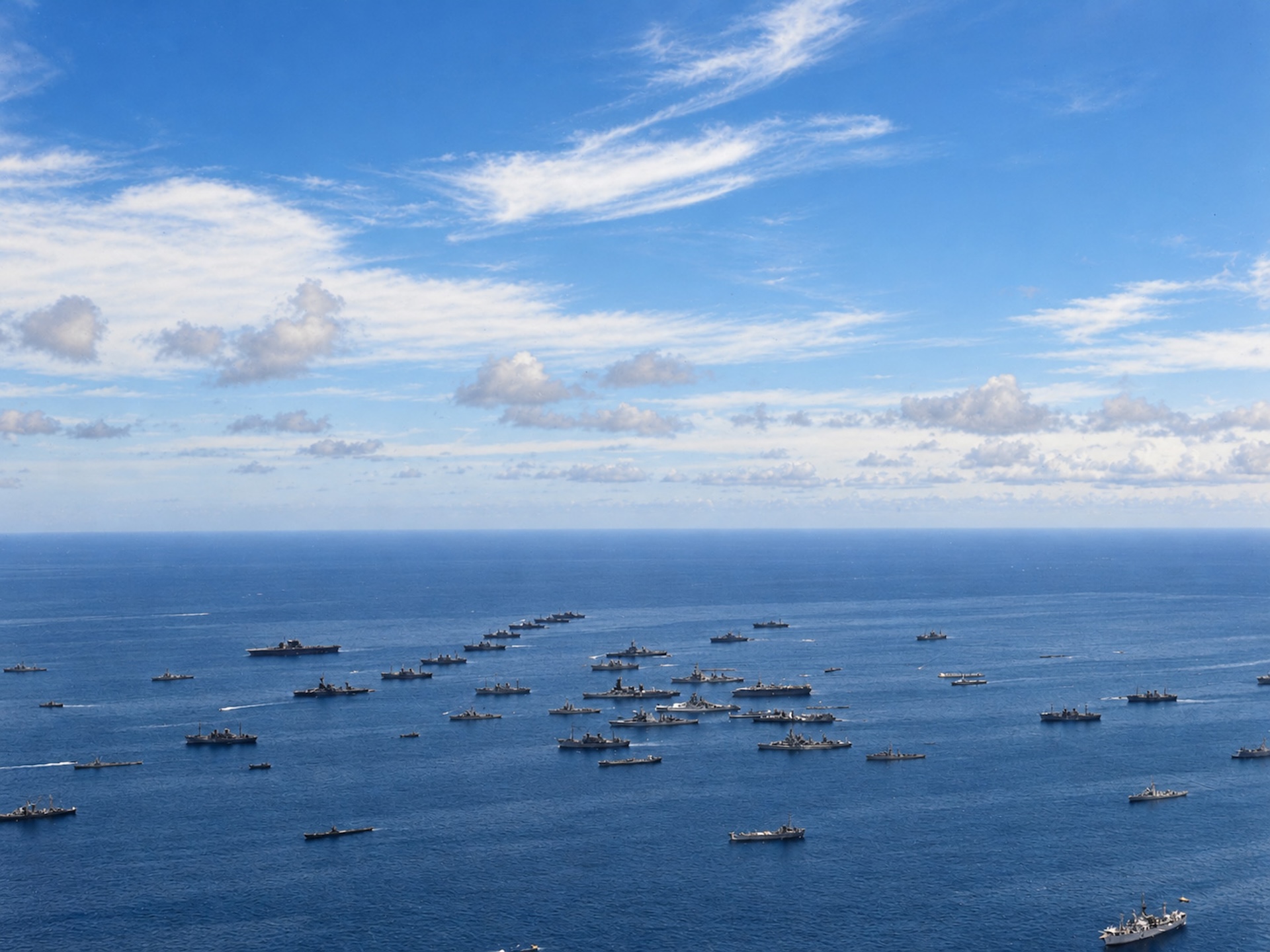
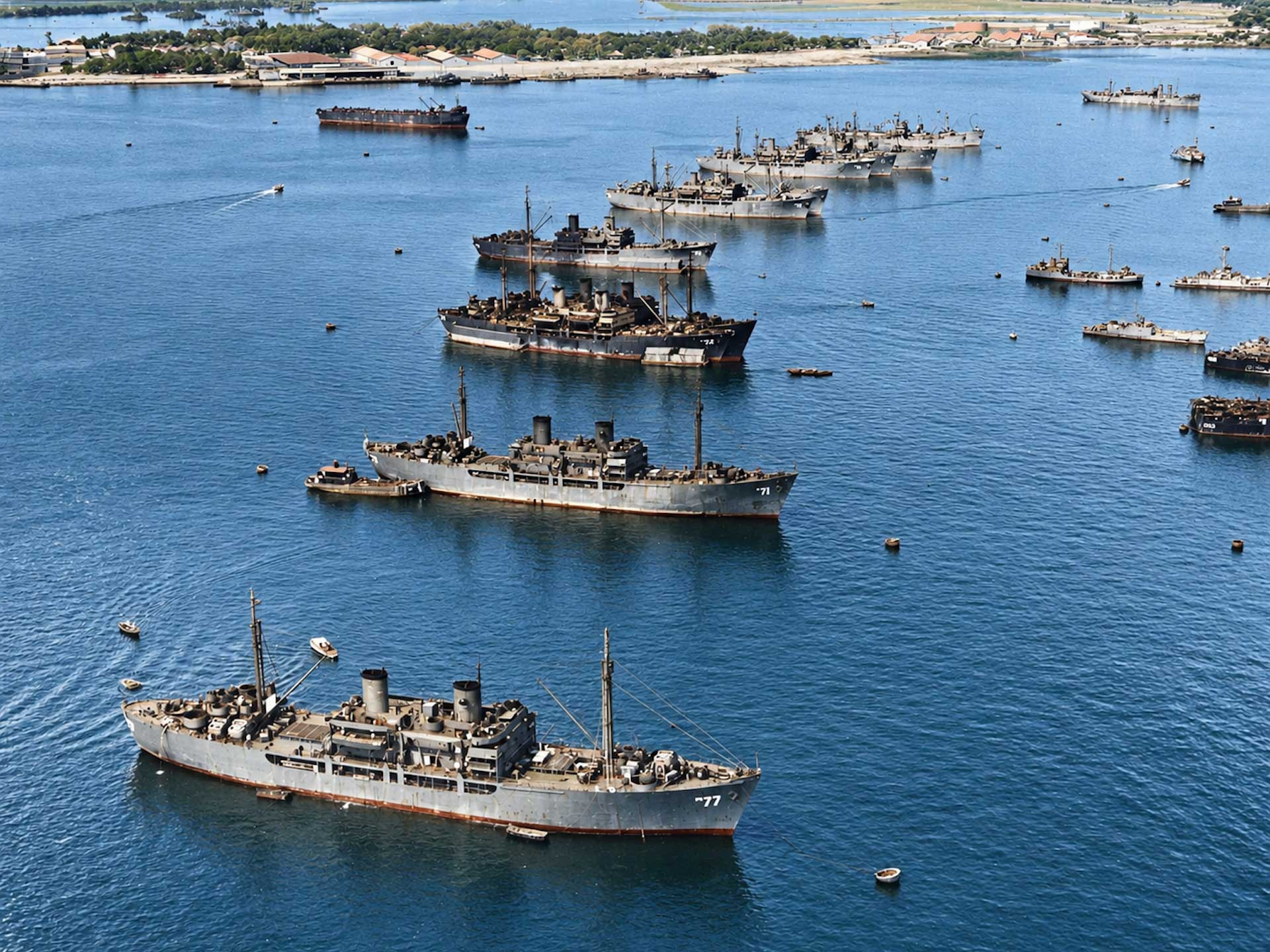
Operation Crossroads was intended to determine how well naval vessels could survive an atomic attack. Under the direction of Rear Admiral William H. P. Blandy, Joint Task Force One assembled more than ninety target ships to evaluate the effects of blast, thermal radiation, and underwater shock. In many respects, the initial results appeared encouraging. Several battleships remained afloat, cruisers survived the explosion, and many vessels suffered less structural damage than planners had expected.
These early impressions quickly changed as radiation survey teams boarded the target ships. Health physicists carrying Geiger counters and ionization chambers encountered radiation levels far exceeding expectations. Decks, bulkheads, rigging, aircraft, and equipment had all been coated with radioactive residues deposited by the base surge. Even vessels that appeared relatively undamaged had become hazardous working environments.
The realization was both immediate and unsettling. Ships that remained seaworthy could no longer be considered operational. Crews were forced to limit the time they spent aboard; protective clothing became essential, and extensive radiation monitoring accompanied every inspection. The Navy soon recognized that contamination, rather than blast damage, had become the principal military consequence of the Baker test.
The extent of the contamination quickly alarmed those responsible for protecting personnel. Dr. Stafford L. Warren, Chief of the Radiological Safety Section for Joint Task Force One, warned that continued work aboard the contaminated vessels posed unacceptable risks. After reviewing radiation survey data collected during the decontamination effort, Warren concluded that the task force faced “great risks of harm to personnel engaged in decontamination and survey work unless such work ceases within the very near future.” His recommendation ultimately prevailed, bringing large-scale decontamination operations to an end and underscoring that the greatest obstacle following Baker was no longer blast damage, but radiation itself.
Repeated decontamination efforts proved frustratingly ineffective. High-pressure seawater, detergents, steam cleaning, wire brushes, abrasives, and chemical solutions removed only part of the radioactive residue. Contamination penetrated paint, collected in rust, accumulated within ventilation systems, and became trapped in inaccessible corners throughout the ships. The radioactive base surge had effectively transformed much of the target fleet into floating sources of radiation.
The Birth of Modern Fallout Science
Baker fundamentally altered scientific understanding of radioactive fallout. Earlier nuclear explosions had demonstrated that radioactive materials eventually returned to Earth, but Baker revealed a different mechanism by which contamination could spread almost immediately through radioactive water droplets rather than fine dust carried high into the atmosphere.
Scientists began distinguishing between local fallout, deposited close to the detonation, and global fallout, consisting of finer particles transported over great distances by atmospheric circulation. Baker became the classic example of intense local fallout, illustrating that geography and the surrounding environment could dramatically influence the behavior of radioactive materials.
The test also demonstrated that water, soil, coral, steel, concrete, and other materials each interacted differently with nuclear explosions. Fallout was no longer viewed as a single, uniform process but as a complex environmental phenomenon influenced by the conditions at the point of detonation. This realization became central to later atmospheric testing programs and ultimately shaped modern environmental radiation science.
Health Physics Comes of Age
Perhaps no scientific discipline was transformed more profoundly by Baker than Health Physics. Under the leadership of Dr. Stafford L. Warren, Chief of the Radiological Safety Section for Joint Task Force One, radiation survey teams confronted challenges for which there were few precedents. During the Manhattan Project, health physicists had focused primarily on protecting laboratory workers and production facilities. Baker required them to monitor an entire contaminated fleet while developing procedures that would later become standard practice throughout the nuclear industry.
Working from survey boats and aboard contaminated vessels, Warren’s teams carried Geiger counters, ionization chambers, and film badges while systematically mapping radiation levels throughout the target fleet. Their measurements demonstrated that contamination had spread far more extensively than anyone had predicted, forcing the Navy to reconsider nearly every assumption about post-detonation operations.
The underwater detonation revealed that radioactive contamination could spread through seawater, settle onto ships, penetrate equipment, and expose personnel long after the explosion itself had ended. In response, health physicists refined contamination surveys, personnel dosimetry, controlled access procedures, protective clothing, and occupational exposure limits. Every contaminated vessel became a field laboratory that expanded the emerging science of radiological protection.
Equally important was the realization that preventing the spread of contamination was just as critical as measuring radiation dose. Those principles remain fundamental to modern health physics, nuclear emergency response, and radiation protection.
Baker’s Lasting Legacy
The consequences of the base surge extended well beyond Operation Crossroads. Plans for Shot Charlie, the third planned nuclear test, were abandoned largely because the target fleet remained too contaminated for meaningful scientific study despite weeks of intensive decontamination efforts. Baker demonstrated that radioactive contamination could persist far longer than anticipated and that removing it from complex military equipment presented an extraordinary challenge.
The lessons learned at Bikini influenced every subsequent U.S. nuclear testing program, including Operations Wigwam, Hardtack, and Dominic, while also shaping Cold War naval doctrine and civil defense planning. Decades later, many of the contamination-control procedures first developed after Baker proved equally valuable during responses to civilian nuclear accidents at Three Mile Island, Chernobyl, and Fukushima. Although fundamentally different from a nuclear detonation, each accident reinforced the same lesson first revealed at Bikini: radioactive contamination often becomes the dominant long-term consequence of a nuclear event.
Conclusion: The Cloud That Changed the Nuclear Age
Eighty years after Operation Crossroads, Shot Baker remains one of the defining scientific experiments of the Atomic Age, not because of its spectacular water column, but because of the invisible radioactive cloud that spread across Bikini Lagoon. The photographs produced by Berlyn Brixner, the contamination surveys directed by Dr. Stafford L. Warren, the technical analyses of Dr. Norris E. Bradbury and Los Alamos scientists, the operational leadership of Rear Admiral William H. P. Blandy, and the later interpretations of Dr. Ralph E. Lapp collectively transformed Baker from a naval weapons test into one of history’s most influential radiological investigations.
As one official post-test assessment later observed, the contaminated ships had become “radioactive stoves, and would have burned all living things aboard them with invisible and painless but deadly radiation.” The phrase captured the central lesson of Baker: many vessels survived the explosion itself, yet became militarily unusable because of radioactive contamination deposited by the base surge.
Baker fundamentally reshaped military planning, accelerated the development of health physics, advanced the scientific understanding of radioactive fallout, and established many of the principles that continue to guide radiation protection and nuclear emergency response today. More importantly, it demonstrated that the most enduring consequences of a nuclear explosion are often invisible, persistent, and environmental rather than immediately destructive. In that sense, the base surge remains one of the most important, and least appreciated, scientific discoveries of the nuclear age.