On 1 July 1946, nearly a year after the atomic bombings of Hiroshima and Nagasaki, the United States detonated an atomic bomb over a fleet of surplus warships anchored in the lagoon of Bikini Atoll in the Marshall Islands. Twenty-four days later, a second bomb was exploded underwater beneath the same fleet.
Known collectively as Operation Crossroads, the tests were intended to answer a straightforward military question: how vulnerable were naval fleets to atomic attack? The answers would prove far more consequential than planners anticipated.
Eighty years later, Operation Crossroads deserves remembrance not merely as the first postwar nuclear weapons test series, but as one of the earliest demonstrations that radioactive contamination, not blast effects alone, would become the defining challenge of the nuclear age.
The fleet at Bikini
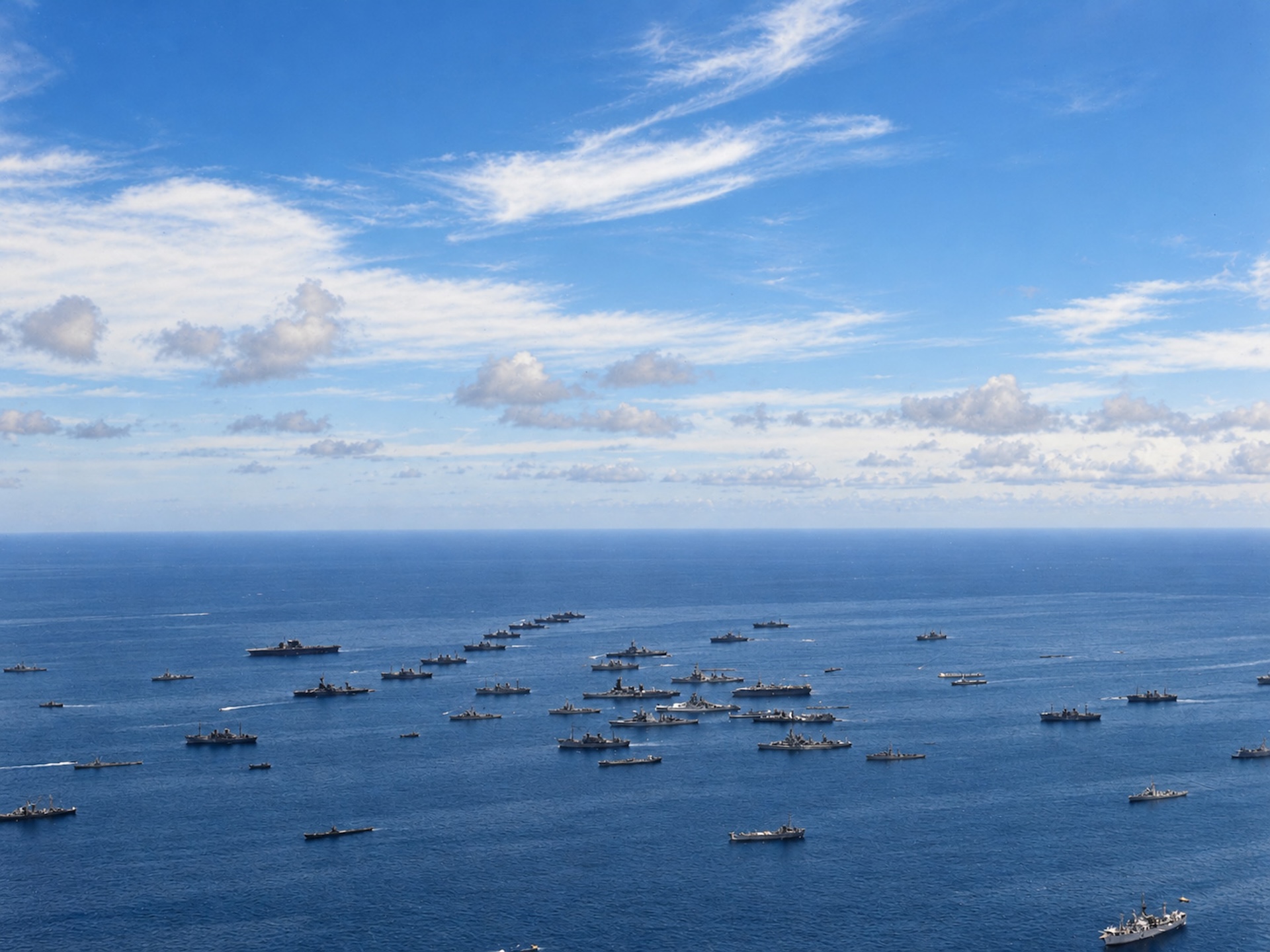
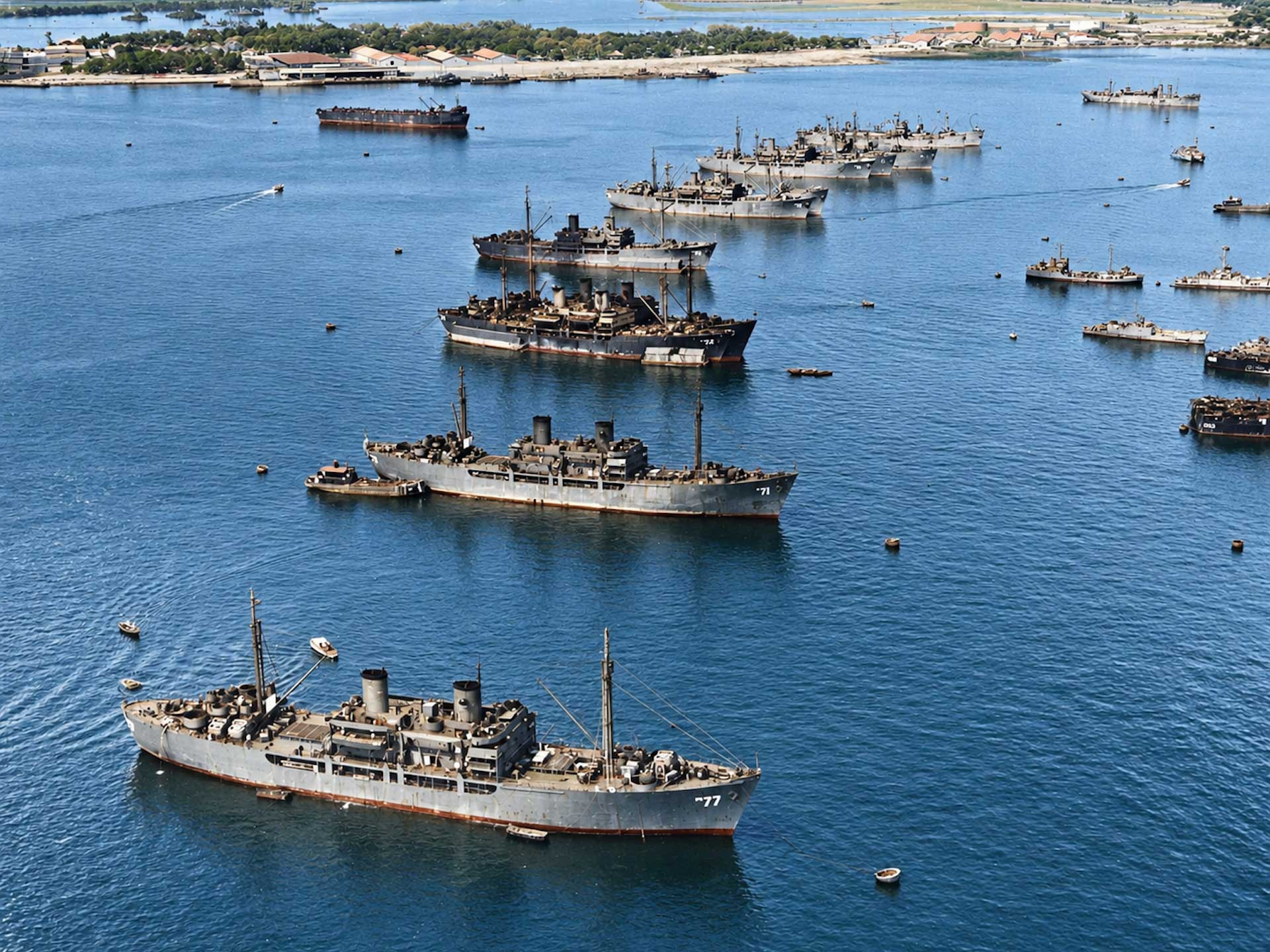
Operation Crossroads assembled an extraordinary armada. More than 240 ships, including battleships, aircraft carriers, cruisers, submarines, and captured German and Japanese vessels, were positioned in Bikini Lagoon. Thousands of animals were placed aboard selected ships to study the biological effects of nuclear explosions. More than 40,000 military and civilian personnel participated in the operation.
The first test, Able, was detonated 158 metres above the target fleet on 1 July 1946. The bomb missed its intended aim point by more than 800 metres. Although several vessels were sunk or heavily damaged, many survived. Military observers concluded that fleets at sea might be less vulnerable to atomic attack than wartime predictions had suggested.
The second test, Baker, conducted on 25 July, produced a dramatically different result. Detonated 27 metres beneath the lagoon surface, the explosion generated a towering column of water nearly 1.6 kilometres high. Ships near ground zero were crushed or sunk. Yet the most important effect was largely invisible. The explosion transformed millions of tonnes of seawater into radioactive spray and mist. Water contaminated with fission products rained down across the target fleet. Radioactive sludge coated decks, equipment and interiors. Vessels that had survived the blast became dangerously contaminated. Military planners had expected physical destruction. They had not anticipated contamination on this scale.
A new battlefield hazard
The Baker test introduced a problem that would recur throughout the Cold War: radiation could render equipment, infrastructure and entire environments unusable long after the explosion itself had ended.
Decontamination crews scrubbed ship surfaces with soap, lye and seawater. They attempted to remove radioactive residues from compartments, machinery spaces and ventilation systems. Their efforts largely failed. Radioactivity penetrated cracks, piping, insulation and inaccessible spaces. Even ships that appeared structurally intact remained hazardous to crews. Several vessels were eventually scuttled because effective decontamination proved impossible.
The target fleet had survived the bomb. It could not survive the contamination. For many participants, this realisation was startling. During the Second World War, military planners had naturally focused on blast, fire and shock. Operation Crossroads demonstrated that the most persistent consequences of nuclear weapons could remain long after the visible destruction had disappeared. In effect, Baker transformed radiation from a scientific concern into an operational reality.
The environmental legacy
The contamination generated by Operation Crossroads extended beyond the target ships. Bikini Atoll had been home to a Marshallese community for generations. Prior to the tests, residents were relocated under assurances that the displacement would be temporary and that they would eventually return. That promise was never fulfilled.
Although Operation Crossroads itself was only the beginning of nuclear testing in the Marshall Islands, it established a pattern that would continue throughout the Pacific Proving Grounds. Between 1946 and 1958, the United States conducted 67 nuclear tests in the Marshall Islands, including the 1954 Castle Bravo detonation, the largest nuclear explosion ever set off by the United States.
The environmental consequences persisted for decades. Radioactive contamination affected land, food supplies and traditional ways of life. Many displaced communities faced prolonged exile and uncertainty. Today, the history of Bikini Atoll serves as a reminder that the impacts of nuclear weapons extend far beyond military targets.
Lessons for the modern nuclear era
Operation Crossroads occurred at a moment when many military leaders still viewed atomic weapons primarily as larger conventional bombs. The tests challenged that assumption. The implications extended well beyond naval warfare.
The contamination problems observed at Bikini foreshadowed later concerns about fallout from atmospheric testing, radioactive contamination from nuclear accidents and the long-term consequences of nuclear war itself. They anticipated lessons reinforced by incidents ranging from Castle Bravo to Chornobyl and Fukushima.
Modern analyses of nuclear conflict often emphasise blast casualties and thermal destruction. Yet Crossroads reminds us that radioactive contamination can transform landscapes, disrupt societies and create hazards that persist for years, decades or longer.
This lesson remains relevant as nuclear-armed states modernise their arsenals and arms-control agreements continue to erode. The expiration of the last remaining strategic arms-control constraints between the United States and Russia has heightened concerns about a renewed arms competition. At the same time, public understanding of nuclear weapons often remains focused on mushroom clouds and immediate devastation.
Operation Crossroads revealed a more complicated reality. The nuclear age would not be defined solely by the destructive power of the explosion itself. It would also be defined by what remained afterwards.
Eighty years later
The iconic photographs of Baker’s immense water column remain among the most striking images of the twentieth century. They capture the spectacle of the atomic age in a single frame. What they do not show is the contamination that settled back onto the lagoon, the ships and the surrounding environment. That invisible residue became one of the most important discoveries of the tests.
Eighty years after Operation Crossroads, the enduring lesson of Bikini Atoll is not simply that nuclear weapons can destroy. It is that their consequences can outlast the moment of detonation, persist across generations and reshape entire environments. The blast lasted seconds. The contamination lasted far longer.
And in many ways, it is contamination, not destruction, that became the defining challenge of the nuclear age.